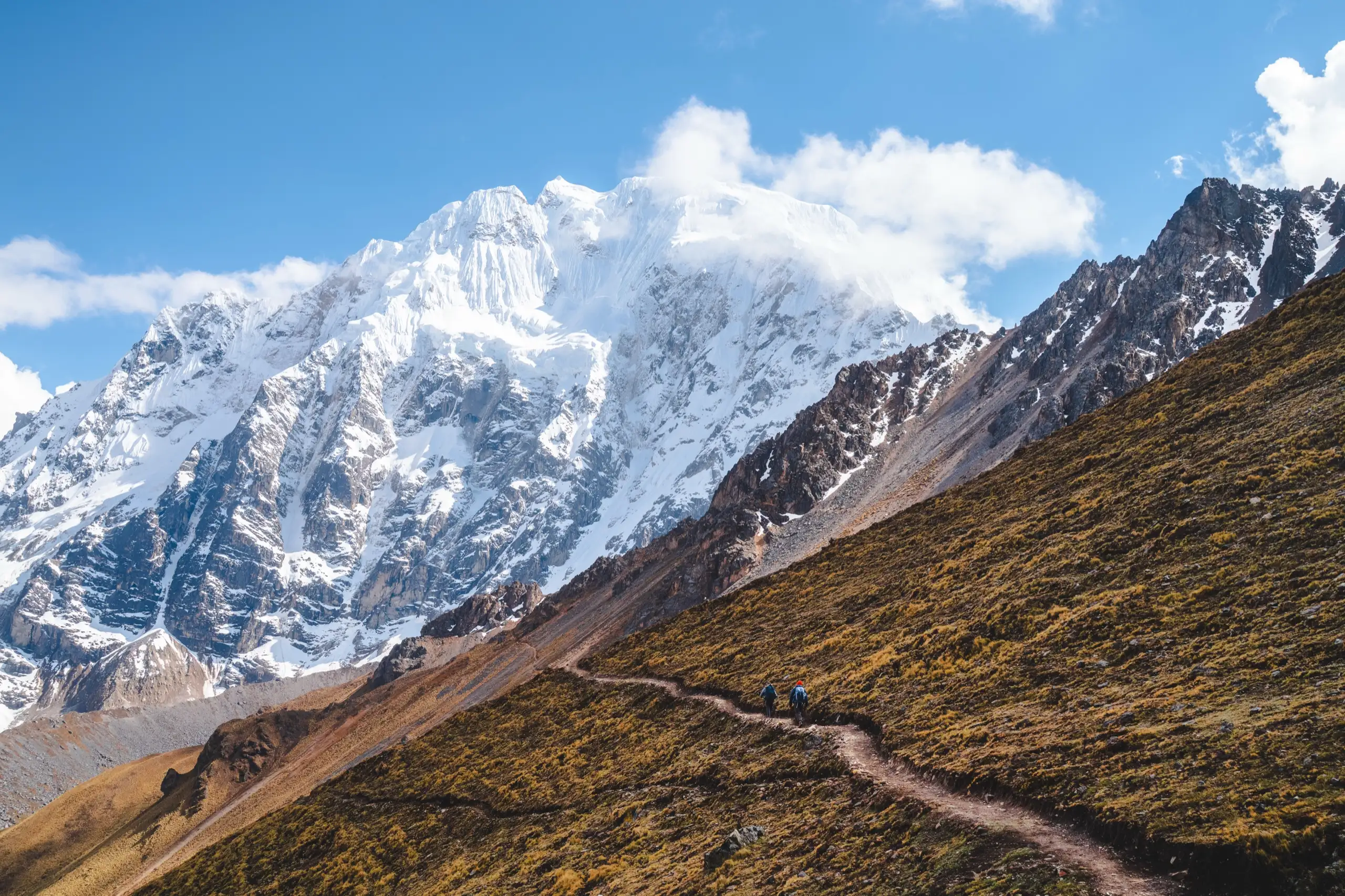
Ahobamba Trek to Machu Picchu
Five days of unrivaled trekking that begins with high-altitude passes below the sacred Apu Nevado Salkantay and then continues down into dense cloud forests that ultimately lead to Machu Picchu. We guarantee that you won't see any other group on the trail as you explore this hidden corner of Peru.
The Route
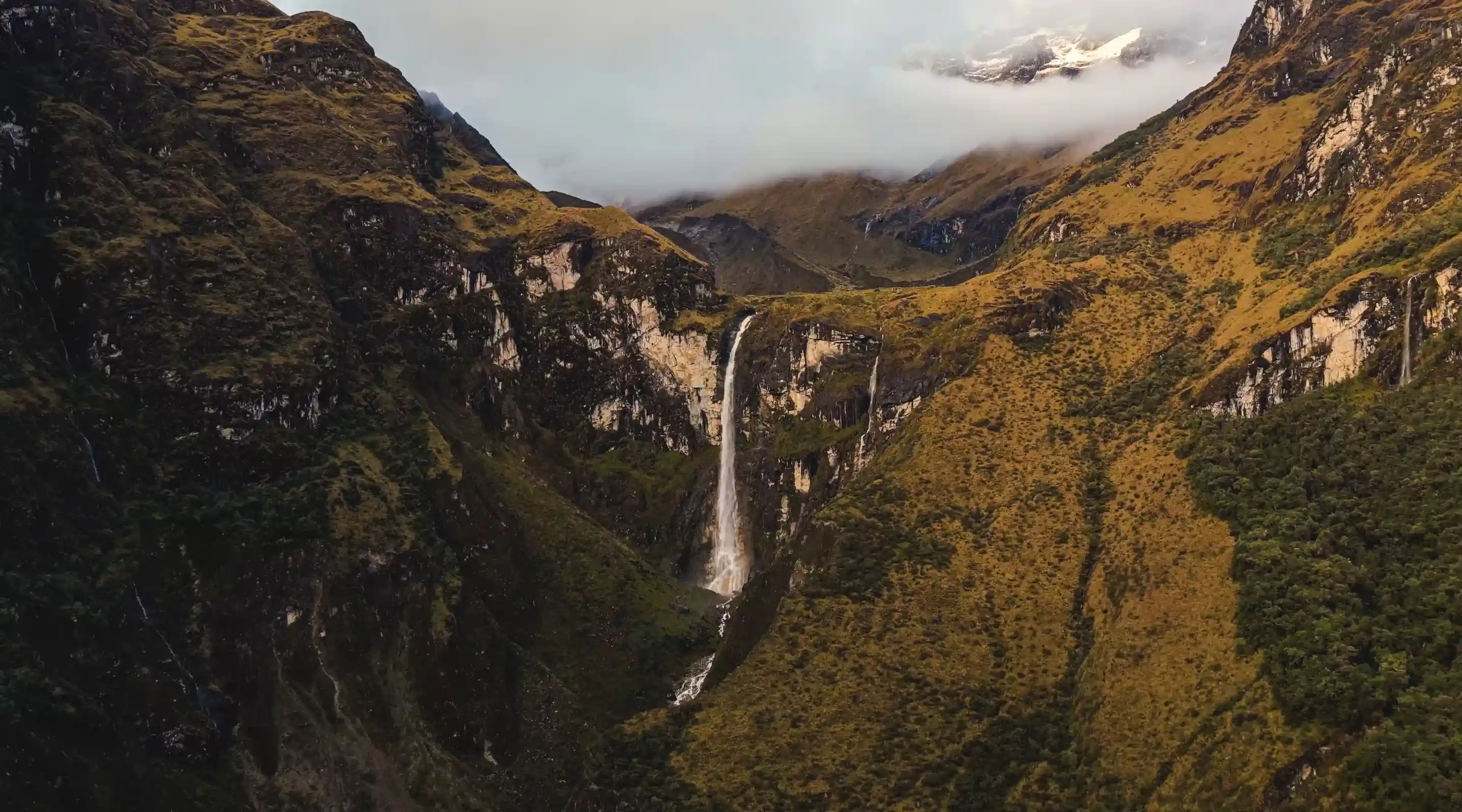
The Ahobamba Trek is for people who want to get away from the crowds en route to Machu Picchu. It is best described as a crescendo—starting with up-close views of Nevado Salkantay, then dropping into the Ahobamba Valley on a trail maintained by local families who live there and work hard to offer this slice of Peru to select trekkers. You'll have a free activity day where you can visit the tallest waterfall in the Cusco region, go fishing in the Ahobamba river, or visit Inca ruins, all accessible from the Mountaineer's House. The trek descends through bamboo-covered cloud forest, and on day three we'll sleep at a third-generation coffee farm before walking the final distance to Aguas Calientes.
Trip Highlights
- Hike to the tallest waterfall in the Cusco region
- Zero crowds — a secluded trail experience
- Visit an ancient Inca village
- The best trekking route to Machu Picchu
5D / 4N
4,900 m / 16,076 ft
Intermediate
May to October
Elevation Profile
Distance
46.11 km
Total Ascent
+1,882 m
Trailhead
4,800 m
High Point
4,900 m
Treks to Machu Picchu Comparison
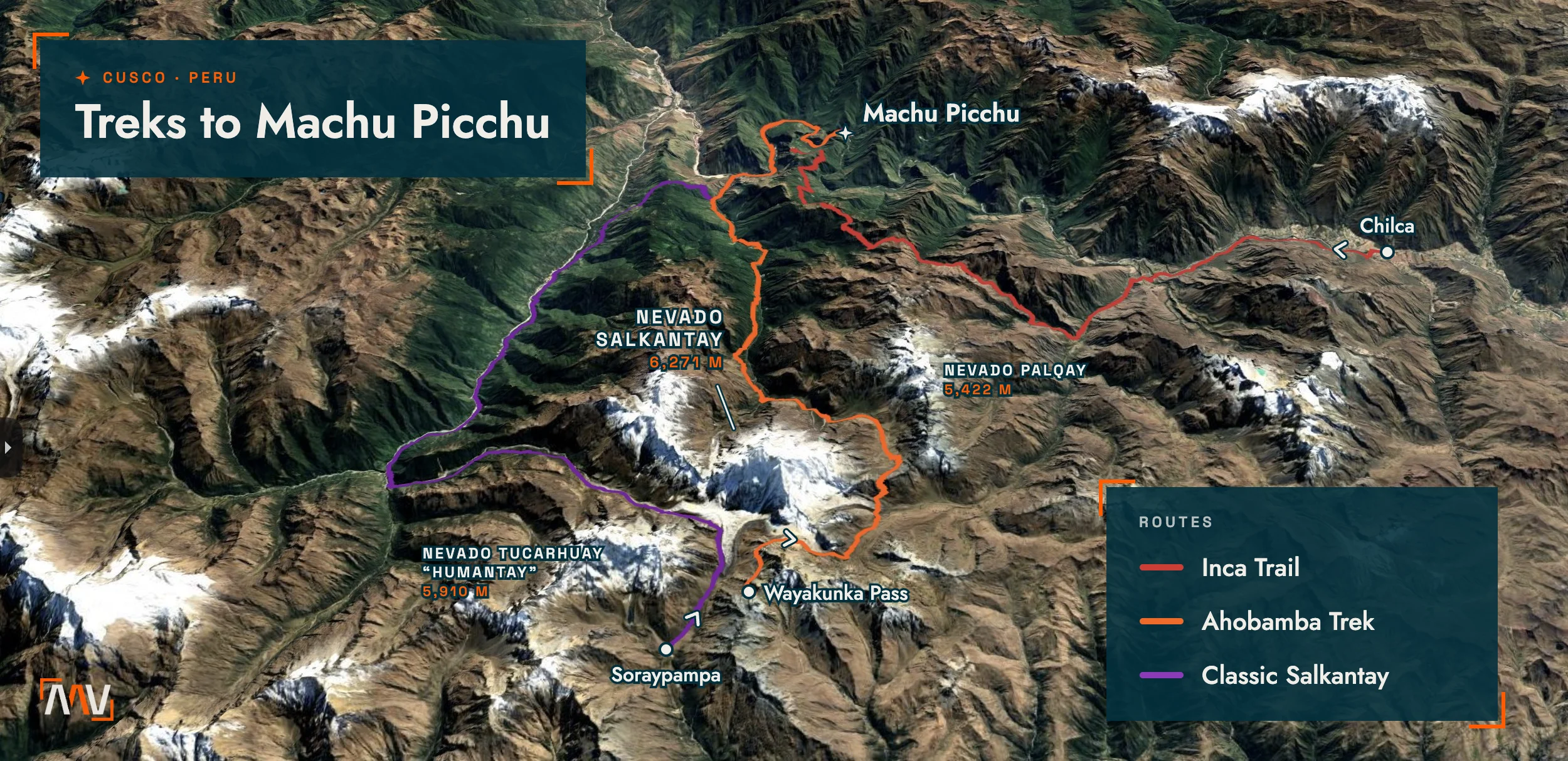 Open the full-size map
Itinerary
We leave Cusco at 4:00 am for the three-and-a-half-hour drive to Waywakunka Pass, where we'll start at 4,800 meters. About one hour into the day we go over Incachiriaska Pass at 4,900 meters, descend a valley, and eat lunch. After lunch, we'll hike up and over Palqay Pass. From Palqay Pass, we descend directly into the Ahobamba Valley, passing remnants of colonial Spanish mining outposts. After about 7 hours of walking, we'll arrive at Homestead 1, where we stay the night. Groups who are moving well have the option of pushing on to the Mountaineer's House instead—this will be evaluated on an individual group basis.
- Distance
- 13.5 km
- Ascent
- 800 m
- Descent
- 1,500 m
A short walking day down the upper valley, passing another homestead on the way to the Mountaineer's House. The rest of the day is open to you: an hour to hike to the waterfall above the cabin or a visit to Inca ruins across the river only a 15-minute walk away. You can also choose to relax around the Mountaineer's House and enjoy the natural beauty of the valley.
- Distance
- 6 km
- Ascent
- 40 m
- Descent
- 700 m
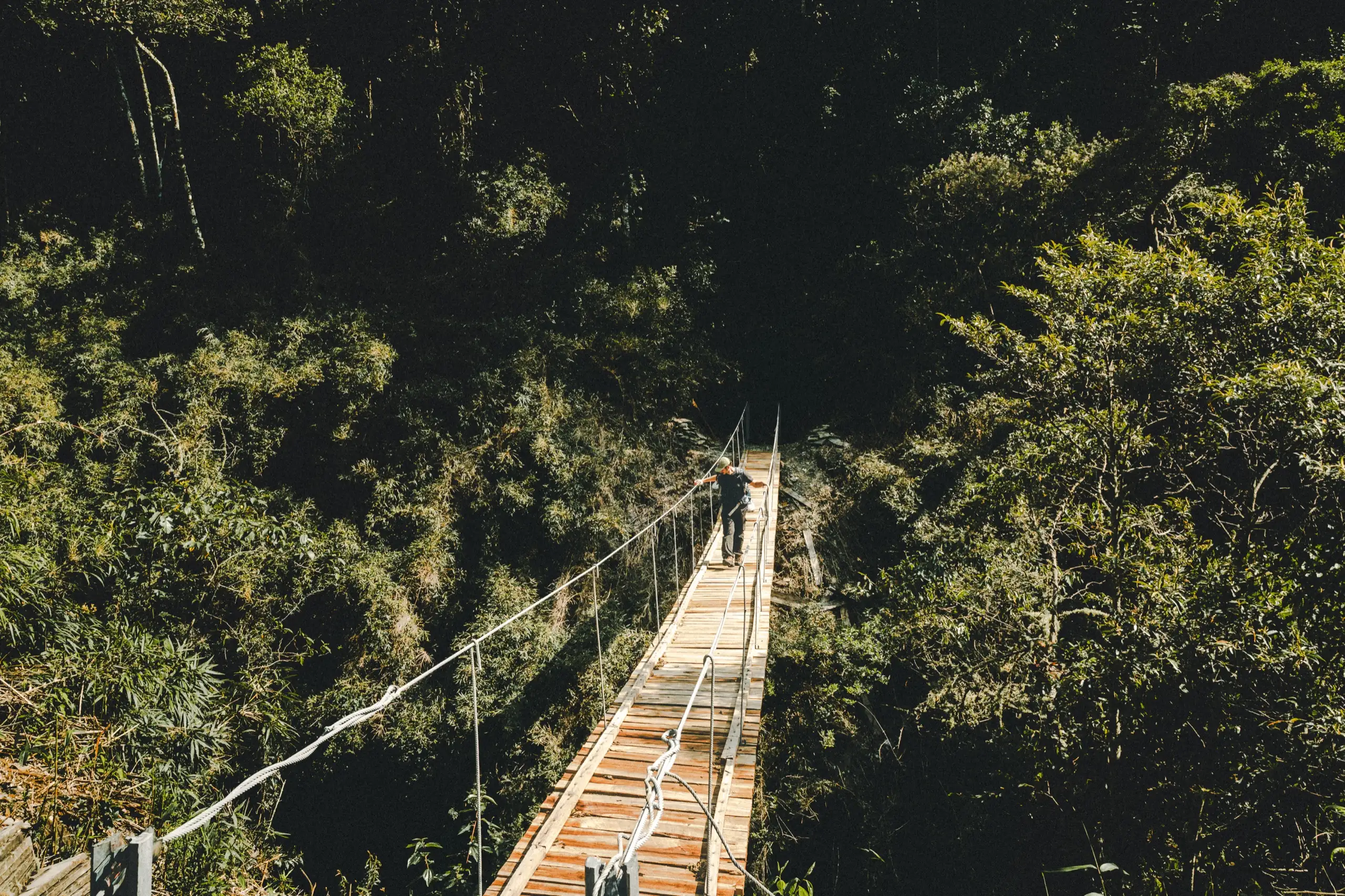
This is the longest descent of the trek, dropping close to 1,900 meters through bamboo-covered cloud forest as the valley narrows. We will cross three bridges and finish the day at a working coffee farm and sleep in a room in their guest house.
- Distance
- 13.3 km
- Ascent
- 555 m
- Descent
- 1,900 m
A final descent to the Hidroeléctrica station at 1,776 meters, the lowest point of the trek, where we join the standard trail and follow the train track into Aguas Calientes. Tonight you'll sleep in a hotel and explore the area before going to Machu Picchu the next day.
- Distance
- 13.3 km
- Ascent
- 464 m
- Descent
- 480 m
You'll have a guided visit to Machu Picchu on the circuit you chose when booking. After visiting the site, you'll return to Aguas Calientes to gather your belongings and board the train back to Cusco.
What's Included
Included
- Transport to trailhead
- Ahobamba Valley permits
- Mountain guide
- Cooks, horses, and arrieros
- All meals during the trek (excludes Aguas Calientes)
- Tents
- Emergency horse
- One hotel night in Aguas Calientes
- Machu Picchu entrance tickets
- Bus from Aguas Calientes to Machu Picchu Sanctuary
- Guided Machu Picchu site visit
- Return train and transfer to Cusco
Not Included
- Airport transfers
- International and domestic flights
- Pre- and post-trek Cusco accommodation
- Sleeping bags and pads (available for rent)
- Riding horse for ascending the high passes (on request, extra cost)
- Personal gear and preferred personal snacks
- Travel insurance
- Gratuities
- Meals in Aguas Calientes
Add-on: riding horse for the high passes
Would you prefer to ride a horse up the high passes? For an additional fee, we can arrange a riding horse to carry you up Incachiriaska Pass (4,900 meters) and Palqay Pass (4,650 meters) on Day 1, the two hardest ascents of the trek. Mention it when you make your inquiry. We always include one emergency horse that travels with every group at no extra cost.
Packing List
Pack for cold mornings at altitude and warm, humid afternoons in the cloud forest — you will pass through both on the same trek. Everything below is a guideline, not a rulebook: bring what keeps you warm, dry, and comfortable. Items marked optional are genuinely optional.
Documents & Money
- Passport
- Cash in Peruvian soles
Clothing
- Regular and long wicking layers — merino wool, polyester, nylon
- Fleece or light insulating mid-layer
- Insulated jacket (down or synthetic)
- Liner gloves
- Waterproof rain jacket
- Trekking pants and shorts
- Trekking socks or sport socks
- Warm hat (beanie) + sun hat or cap
- Buff / neck gaiter
Footwear
- Hiking boots or low-top equivalent (trail runners generally OK in high-season months)
- Camp sandals for evenings
- Gaiters — optional, useful in wet season, Nov–Mar
Gear & Equipment
- Daypack, 30–55 L, with rain cover or trash compactor bag for lining
- Sleeping bag rated to –10 °C / 14 °F
- Inflatable or foam sleeping pad
- Trekking poles — optional
- Headlamp + spare batteries
- 1–2 L water bottles or hydration bladder (safe drinking water is provided throughout)
- Dry bags or zip-locks to keep belongings dry — optional
Health & Hygiene
- Personal medications + copy of prescriptions
- Altitude medication if advised by your doctor
- Sunscreen
- Sunglasses
- Lip balm
- Insect repellent
- Personal first-aid kit — recommended
Electronics & Other
- Personal favorite trail snacks (all meals on the trek and basic snacks are provided)
- Books or eReader for downtime
- DSLR or mirrorless camera for photos
- Power bank to charge cellphone, etc.
- Extra headlamp batteries
- Personal travel insurance
Don't Have Everything?
You do not need to own the full list. We can arrange rentals in Cusco for sleeping bags, sleeping pads, daypacks and trekking poles, and advise on what is worth buying versus borrowing. Tell us what you already have and we will fill the gaps.
Frequently Asked Questions
From the Adventure
Ready to plan this trek?
Every departure is arranged privately. Send us your objective, experience, and travel window.